How will AI integrate with my existing tools and workflows?

How Will AI Integrate With My Existing Tools and Workflows?
Artificial Intelligence (AI) is no longer a futuristic concept; it is actively transforming workplaces and business processes across the globe. As organizations increasingly adopt AI technologies, a common question arises: How will AI integrate with my existing tools and workflows? Understanding this integration is critical to ensure a smooth transition, enhance productivity, and maximize the benefits of AI.
The Importance of Seamless Integration
Introducing AI to a company’s current ecosystem isn’t about replacing every tool or workflow but about enhancing and amplifying their capabilities. Successful AI integration can lead to:
- Improved efficiency and automation of repetitive tasks
- Data-driven decision making by leveraging AI analytics
- Increased accuracy and reduced human error
- Enhanced customer experiences through AI-powered insights and interactions
- Better resource allocation and time management
Without seamless integration, companies risk disruption, employee frustration, and a poor return on investment.
How AI Fits Into Existing Digital Ecosystems
Most modern tools and platforms now offer APIs (Application Programming Interfaces), making them more adaptable and capable of communicating with AI services. The approach to integration generally depends on a few factors:
- Type of AI technology: From natural language processing and computer vision to machine learning models, the choice of AI influences integration tactics.
- Existing platforms and tools: CRM systems, project management tools, customer service platforms, and analytics software all have unique integration potentials and challenges.
- Data availability and quality: AI thrives on data. Existing workflows that generate, collect, and store high-quality data make integration smoother.
- Scalability needs: Considerations about whether integration is a pilot or enterprise-wide impact the complexity and tools chosen.
Layers of AI Integration
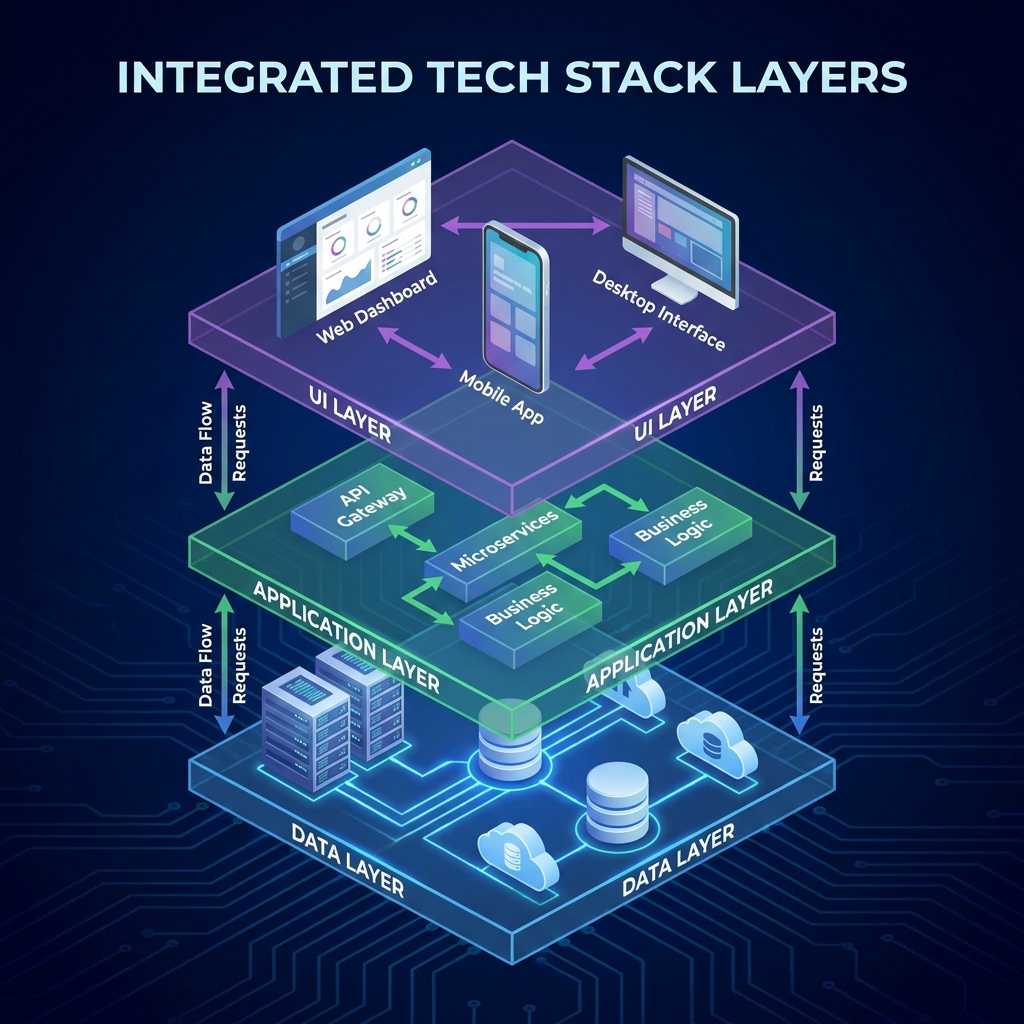
AI can integrate at multiple layers within an organization’s infrastructure:
- Data Layer: AI systems access and analyze data from existing databases and sources.
- Application Layer: AI tools augment or embed functionality within current software applications.
- User Interface Layer: AI-powered features enhance user interactions, such as chatbots or intelligent assistants.
Common Methods of Integrating AI
1. APIs and Connectors
Application Programming Interfaces (APIs) are the most popular method to link AI capabilities with existing software. Many AI providers offer RESTful APIs that developers use to send data and retrieve AI-processed outputs.
2. Plugins and Extensions
Some AI tools provide ready-made plugins or extensions that embed directly into popular software (e.g., CRM systems like Salesforce or project management tools like Jira). This method offers rapid deployment without significant custom coding.
3. Custom Development
In some cases, companies develop bespoke AI solutions tailored to their workflows. This may combine APIs, SDKs, or open-source AI frameworks and requires more technical expertise but delivers highly customized functionality.
4. AI-Powered Platforms
Certain platforms come with integrated AI features that naturally fit into your existing workflow. For example, automation platforms with AI capabilities might allow you to orchestrate complex workflows across multiple tools seamlessly.
Areas Where AI Typically Integrates Smoothly
- Customer Relationship Management (CRM): AI boosts lead scoring, sentiment analysis, and personalized marketing.
- Project Management: Predictive scheduling, resource optimization, and risk detection.
- Customer Support: Chatbots, automated ticket triaging, and knowledge base recommendations.
- Business Intelligence: Automated data analysis, insights generation, and reporting automation.
- Human Resources: Resume screening, employee sentiment analysis, and productivity tracking.

Challenges to Consider During AI Integration
While AI integration brings transformative benefits, it also presents challenges that must be addressed:
- Data Privacy and Security: Introducing AI can raise concerns about data collection, storage, and compliance.
- Employee Training and Adoption: Staff need to understand and trust new AI-enhanced workflows.
- Legacy Systems: Older or proprietary systems may not support easy integration.
- Bias and Accuracy: AI systems must be tested and monitored to avoid biased or incorrect outputs.
- Cost and Resource Constraints: Budget and IT resources impact the depth and speed of integration.
Best Practices for a Successful AI Integration
Start Small and Scale
Begin with pilot projects or specific business units. Small wins build momentum and demonstrate ROI that supports broader adoption.
Evaluate Your Data Readiness
Clean, well-structured, and comprehensive data is the foundation for AI success. Invest in data governance and management before deep integration.
Choose Compatible Tools
Opt for AI solutions and platforms that naturally integrate with your existing technology stack, leveraging flexible APIs and connectors.
Involve Stakeholders Early
Engage employees, IT staff, and management early in the process to align AI capabilities with real workflow needs and encourage buy-in.
Monitor and Iterate
AI integration is an ongoing process. Use performance metrics and user feedback to refine workflows, resolve issues, and expand AI features.
“Artificial intelligence is not a magic bullet, but when integrated thoughtfully into existing systems, it becomes a powerful catalyst for innovation and efficiency.”
Future Outlook: AI and Workflow Integration
Looking ahead, AI systems will become even more embedded directly into tools and workflows. Innovations such as generative AI, explainable AI, and low-code/no-code AI platforms will lower technical barriers, enabling even non-technical users to customize AI-driven workflows.
By adopting a strategic approach to AI integration — focusing on compatibility, user experience, and continuous learning — businesses can create intelligent workflows that are adaptive, efficient, and aligned with evolving goals.
Summary
AI integration with existing tools and workflows is a multi-dimensional process requiring attention to technology, data, people, and processes. It offers substantial benefits including automation, insight generation, and improved decision-making, but also presents challenges such as ensuring data privacy and managing change.
With thoughtful strategy, beginning with pilot projects and strong data practices, AI can be effectively woven into your current systems to accelerate innovation and competitive advantage.