
AI Services in St Louis

Turn AI interest into a useful business system

Most AI services pages cover strategy, custom implementation, chatbots, automation, integrations, training, and measurable productivity gains. The shared message is that AI should remove repetitive work, improve response time, and help teams make better decisions.
STL CodeScape brings that work into the website and services ecosystem instead of treating AI like a disconnected app. Because we already build custom WordPress sites, manage content, tune performance, and connect tools, we can make AI feel like part of the buisness instead of a side experiment.
For St. Louis companies, that usually means starting with the bottlenecks people already complain about: unanswered leads, repeated questions, messy intake, slow content updates, or spreadsheet work that eats half a Friday. We make the first AI step practical, local, and useful, with less “future of everything” fog machine energy.
-
AI StrategyIdentify realistic use cases, quick wins, risk points, and a build path your team can understand.
-
Chatbots And AgentsAnswer questions, guide visitors, collect lead details, and support internal workflows.
-
Workflow AutomationConnect forms, CRMs, email, documents, analytics, and website tasks into cleaner flows.
-
MeasurementTrack outcomes like lead response speed, saved time, content throughput, and conversion lift.
Cover the AI services buyers expect to compare

A serious AI services page should make the offer concrete. Visitors want to know whether you provide consulting, done-for-you implementation, custom AI development, AI automation, chatbot setup, AI content workflows, reporting, and ongoing support.
STL CodeScape packages AI around practical web outcomes: better lead handling, smarter search engine optimization, faster content updates, cleaner internal handoffs, and website experiences that help customers move forward. That integartion-first mindset matters when your website is already the center of the sales path.
A local contractor, medical office, agency, school, or professional service firm in the St. Louis area does not need the same AI setup as a national software company. We shape the service around the real workflow, which is less glamorous than saying “agentic orchestration” twelve times, but much more likely to work on Monday morning.
Use a clear process from idea to launch
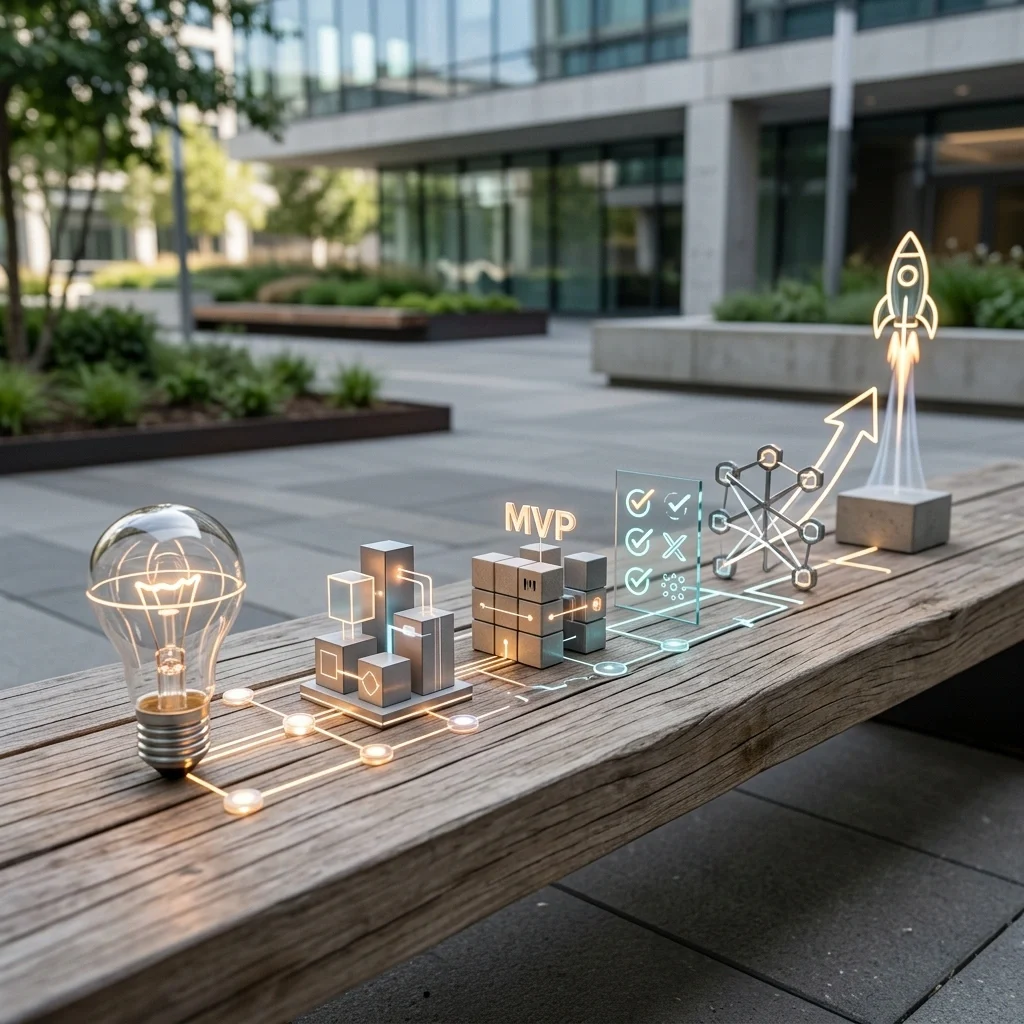
AI service buyers expect a process section with discovery, assessment, workflow mapping, roadmap creation, prototype building, testing, launch, training, and support. Without that structure, AI sounds risky because nobody can see how the work becomes real.
STL CodeScape keeps the process grounded in the same practical rhythm as our web design process: understand the goal, map the user journey, build carefully, test with real scenarios, and improve after launch. That keeps the operatonal side and the customer experience connected.
One of the best AI planning conversations I had was with a client at Buder Library in South City St. Louis about a chatbot setup. We spent more time talking through real visitor questions than software features, which is exactly how these projects should start.
-
DiscoverReview goals, bottlenecks, tools, customer questions, team habits, and available content.
-
MapTurn the workflow into use cases, guardrails, required data, and success metrics.
-
BuildCreate the chatbot, automation, integration, content system, or internal AI assistant.
-
TestRun realistic prompts, bad inputs, edge cases, privacy checks, and handoff scenarios.
-
ImproveTune prompts, content, tracking, workflows, and user feedback after the system is live.
Build chatbots that answer, qualify, and guide

The common chatbot section promises 24/7 responses, lead capture, customer support, appointment guidance, product or service recommendations, handoff to humans, and answers based on approved business information. It should also explain limits so the bot does not pretend to know everything.
STL CodeScape builds chatbot setups around your actual website content, intake forms, service pages, and support needs. A bot can point visitors toward contact, explain services, collect useful details, and pass a cleaner lead to your inbox without inventing mystical nonsense in the corner.
For St. Louis businesses that get repeated questions after hours, a helpful assistant can keep the conversation moving until your team is back online. The trick is giving it boundaries, tone, fallback rules, and a clear way to escalate when the visitor needs a real person.
-
Approved AnswersUse your website, FAQs, policies, and service details as the source of truth.
-
Lead QualificationAsk the right questions before the inquiry reaches your team.
-
Human HandoffRoute sensitive, custom, or high-value conversations to a person.
-
Conversation TrackingReview topics, gaps, lead quality, and where visitors need clearer content.
Connect AI to the repeated work slowing your team down

AI automation pages usually mention repetitive task reduction, data entry, lead routing, customer follow-up, document processing, calendar workflows, CRM updates, content repurposing, reporting, and integration with tools the business already uses.
STL CodeScape can connect automation to your WordPress forms, analytics, content updates, CRM workflows, email notifications, and SEO tasks. That lets the website do more of the boring but important measurment and handoff work.
I also had a meeting with Viviano Windows & Door on Watson in St. Louis about setting up automated AI SEO optimization. That kind of project is a good example of where AI can help with recurring review, prioritization, and content improvements without replacing human judgment.
Add governance, privacy rules, and human review

AI pages that want to build trust should cover data privacy, approved use policies, tool selection, model limits, human approvals, permissions, logging, compliance concerns, security, and what happens when the AI is unsure.
STL CodeScape treats guardrails as part of the build, not a paragraph tacked on after the demo. We define what the system can access, what it can say, when it should stop, and when a person needs to review the output before anything reaches a customer.
That matters for St. Louis organizations handling customer data, service quotes, medical-adjacent questions, legal-adjacent intake, school information, or sensitive internal documents. Good goverance is not there to slow the project down; it keeps the useful parts from wandering into expensive weirdness.
- Approved tools
- Data boundaries
- Human review
- Audit trails
- Output testing
AI works best when the system knows its job, its limits, and when to hand the work back to a person.STL CodeScape
Help the team actually use what gets built

Competitor pages often include executive training, team workshops, documentation, adoption programs, support, and change management. This content reassures buyers that the work will not end with a confusing login and a vague promise.
STL CodeScape writes plain-language notes, trains around real workflows, and keeps the website owner in control. If we build an AI system for your custom WordPress development stack, we want your team to understand what it does, how to review it, and how to ask for changes without needing a decoder ring.
For local teams in St. Louis, adoption can be as simple as a few clear prompts, a shared checklist, a short review routine, and a monthly improvement habit. The best AI systems are not magic; they are continous little helpers with good instructions.
-
DocumentationSimple notes for what the system does, where data lives, and how reviews work.
-
Team TrainingWalk through real tasks, prompt examples, limits, and escalation rules.
-
Simple MetricsWatch saved time, leads handled, content updates, response speed, and quality issues.
-
Ongoing TuningImprove prompts, source content, automations, and reporting as the team learns.
Answer the questions buyers ask before starting AI

The most useful AI service FAQs answer whether AI is right for the business, what systems can be connected, how long implementation takes, what data is safe to use, how results are measured, and whether the team needs technical skills.
STL CodeScape keeps those answers tied to your website, your workflow, and your actual team capacity. We would rather build one dependable AI workflow than sell five seperate automations that nobody has time to manage.