Can AI help score, tag, or prioritize incoming leads and tickets?

Can AI Help Score, Tag, or Prioritize Incoming Leads and Tickets?
In today’s fast-paced business environment, companies are inundated with a flood of incoming leads and support tickets. Managing these efficiently can be a daunting task, often leading to delays, mismanagement, or even lost opportunities. Artificial Intelligence (AI) has emerged as a game-changer in this realm, offering powerful tools to score, tag, and prioritize leads and tickets automatically. But how exactly does AI accomplish this, and what are the tangible benefits?
The Challenge of Managing Leads and Tickets
Businesses across industries generate vast amounts of data from customer interactions. These interactions come as inquiries, sales leads, technical support tickets, or feedback. Handling this influx manually requires considerable human effort and is inherently prone to errors such as misclassification or missed follow-ups.
- Volume Overload: Large volumes of leads and tickets can overwhelm customer service and sales teams.
- Prioritization Issues: Without a robust system, critical requests may go unnoticed or delayed.
- Inconsistent Tagging: Incorrect or inconsistent tagging impairs data analysis and routing.
- Inefficient Lead Scoring: Without proper scoring, the sales team might waste efforts on low-potential leads.
Given these challenges, AI-driven automation is reshaping how organizations manage this critical aspect of customer engagement.

How AI Scores Leads and Tickets
Lead scoring traditionally involves assigning numeric values to leads based on attributes like demographics, behavior, and interaction history to predict their likelihood to convert. AI enhances this by utilizing machine learning and predictive analytics models that evaluate multiple dynamic data points efficiently.
Machine Learning Models
AI models are trained on historical lead and ticket data to identify patterns correlating with positive outcomes such as conversions or timely resolution. Features used may include:
- Demographic information (industry, company size, job title)
- Engagement metrics (email opens, website visits, downloads)
- Communication sentiment (analyzing tone in emails or chat)
- Past purchase or support history
By continuously learning from new data, these models improve their accuracy over time, providing dynamic lead and ticket scores that assist sales and support teams in focusing their efforts more effectively.
Tagging and Categorization with AI
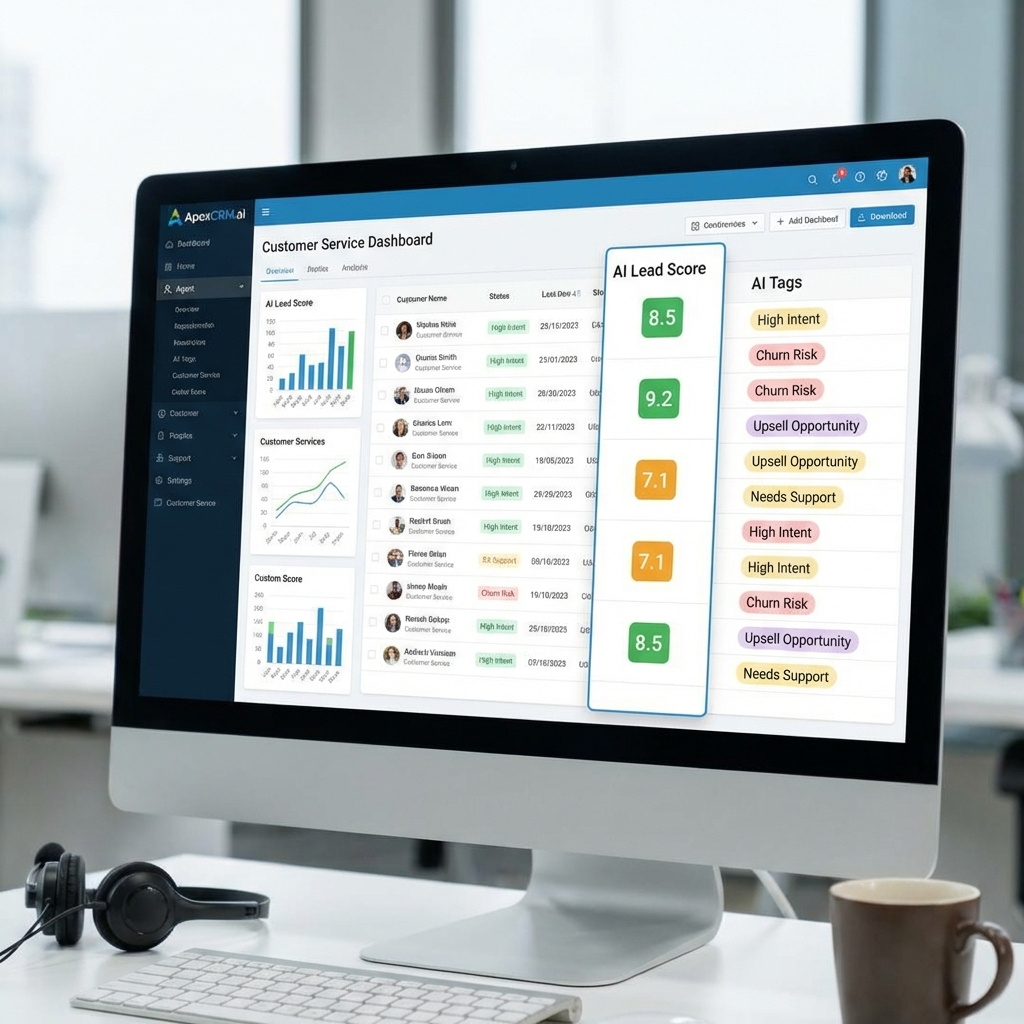
Tagging tickets and leads correctly is essential for proper routing, analytics, and response strategies. AI-powered Natural Language Processing (NLP) techniques analyze text within tickets or lead forms to automatically categorize and tag the data.
Benefits of AI-Based Tagging
- Accuracy: Reduces human error and inconsistencies in tagging.
- Speed: Instantly identifies relevant categories or topics.
- Scalability: Handles large volumes with minimal latency.
For example, a support ticket mentioning “login issue” might be tagged automatically under “Authentication Problems,” which helps route it directly to the right technical team.
Prioritization: Why AI Makes a Difference
Not all leads or tickets require the same urgency or resources. AI algorithms assess the potential value and urgency by combining lead scores with business rules and historical benchmarks.
Criteria Used for Prioritization
- Lead scoring thresholds indicating conversion likelihood
- Ticket severity detected via sentiment analysis or keywords
- Customer value segmentations (e.g., VIP clients)
- Time sensitivity, such as SLA deadlines or recent activity
This prioritization streamlines work queues so agents address high-impact leads and critical tickets first, improving overall customer satisfaction and boosting sales efficiency.
Real-World Applications and Case Studies
Several companies have reported significant performance improvements by implementing AI for lead scoring, tagging, and ticket prioritization:
- Sales Acceleration: AI-driven lead scoring helped a SaaS company increase sales conversion rates by 20% within six months by focusing on high-potential prospects.
- Support Efficiency: A global tech firm reduced ticket resolution times by 30% by automatically categorizing and prioritizing support tickets using AI.
- Customer Experience: Businesses using AI to tag requests saw faster routing to specialized support teams, improving Net Promoter Scores (NPS).
“AI has transformed our ability to respond quickly and accurately to both leads and customer issues. It helps our teams prioritize what really matters at any given moment.” – Customer Service Director, Fortune 500 Company
Implementing AI: Best Practices
To realize AI’s benefits in scoring, tagging, and prioritizing, organizations should:
- Ensure Data Quality: Clean, well-labeled historical data is critical for effective AI model training.
- Customize AI Models: Tailor models to specific industries and workflows to improve relevance.
- Integrate Seamlessly: AI tools should be embedded into existing CRM and ticketing systems for easy adoption.
- Monitor and Refine: Regularly review AI outputs to avoid biases and improve accuracy over time.
Potential Challenges and Considerations
While AI offers tremendous benefits, companies must also navigate certain hurdles:
- Bias Risks: Models trained on biased data can perpetuate unfair treatment of certain leads or customers.
- Privacy Issues: Handling sensitive customer information requires strict compliance with data protection laws.
- Change Management: Employees may resist automation, requiring clear communication and training.
- Cost: Initial investment and maintenance for AI solutions can be significant.
Conclusion
AI-driven lead scoring, tagging, and prioritization are revolutionizing how businesses manage incoming leads and tickets. By leveraging advanced machine learning and NLP techniques, AI helps businesses work more efficiently, improve customer satisfaction, and increase sales effectiveness. With careful implementation and ongoing monitoring, AI can become an indispensable partner in optimizing customer engagement workflows.
Ultimately, companies that adopt AI to intelligently manage their lead and ticket pipelines will be better positioned to respond quickly to opportunities and challenges in an ever-competitive marketplace.